Instead of appealing to the Supreme Court, the administration enacted a second version of the plan. Before the Supreme Court could consider the merits of the second plan, the administration in September announced a new one. It blocked entry into the United States of most people from Chad, Iran, Libya, Somalia, Syria and Yemen, and certain visitors from North Korea and Venezuela. The latter two countries are not part of the challenge before the Supreme Court, and the administration on April 10 removed Chad from the list. "Not a single person from these countries has killed anyone in a terrorist attack in the United States in over four decades," the brief stated.
Donald Trump's travel ban heads to the Supreme Court
The challengers argue that Mr Trump's latest travel ban is a direct descendant of his campaign-trail calls for a "total and complete shutdown" of Muslims entering America "until our country's representatives can figure out what is going on". A willing suspension of disbelief is key to properly experiencing any piece of theatre, and—if Mr Trump is to prevail—the same could go for this week's hearing. should have stayed with the original Travel Ban, not the watered down, politically correct version" that became the second version. White House statements and speeches to foreign governments, of course, are scripted, edited and filtered; Mr Trump's tweets emphatically are not. While Mr Trump noted that these terrorist incidents were "directly contrary to the spirit of Ramadan", the subtext was not difficult to discern.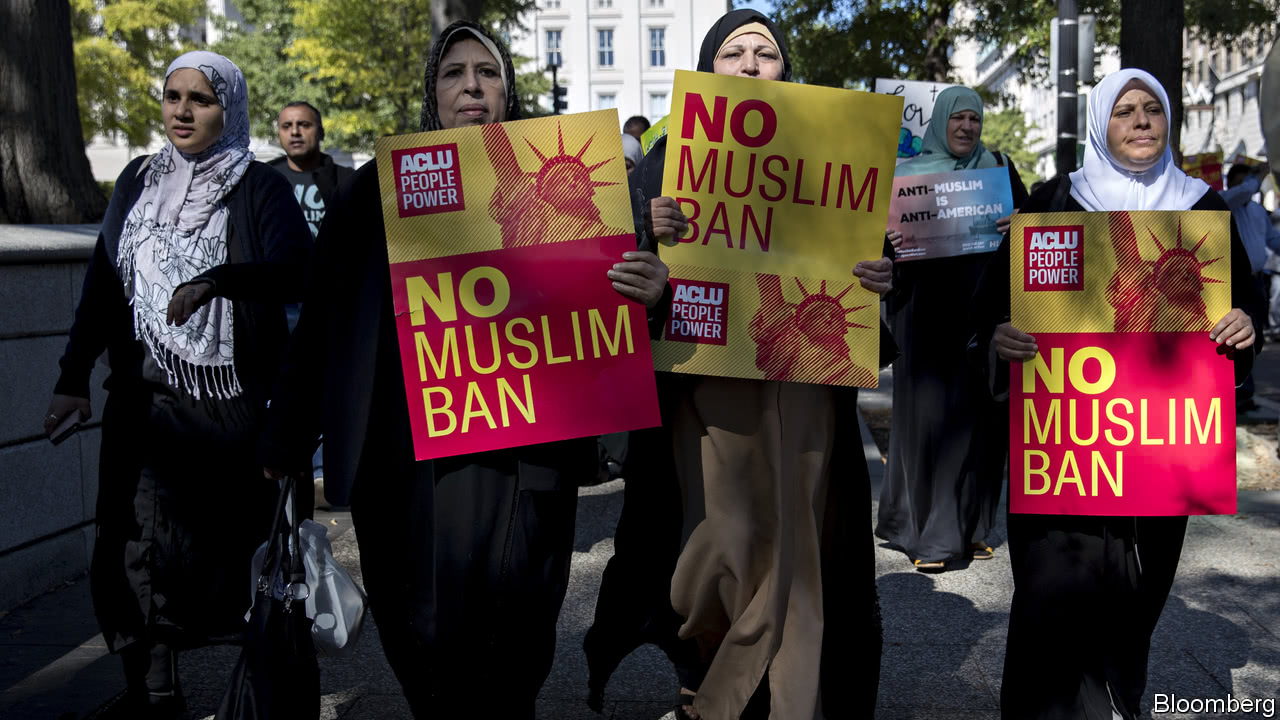
The travel ban case will be the Supreme Court's first dive into Trump policy
according to The justices' first deep dive into a Trump administration policy comes in a dispute over the third and latest version of the administration's ban on travel from some countries with majority Muslim populations. Apart from the campaign statements, Trump's presidential tweets about the travel ban and last fall's retweets of inflammatory videos that stoked anti-Islam sentiment all could feature in the court's discussion of the travel ban's legality. Analysis: The constitutional showdown over President Donald Trump's travel banOne key issue will be how the court evaluates administration actions. Trump's first travel ban was issued just a week after he took office in January 2017, and was aimed at seven countries. Circuit Court of Appeals in Richmond, Virginia, agreed with the ban's opponents.Author

Hi, Its me Hafeez. A webdesigner, blogspot developer and UI/UX Designer. I am a certified Themeforest top Author and Front-End Developer. I'am business speaker, marketer, Blogger and Javascript Programmer.


0 comments:
Post a Comment